Editor's Choice 2026

Math 2.0: Measure Progress Beyond Test Scores

Stop memorizing. Start understanding. Grab some blocks. Feel the numbers. Real math isn't about speed. It's about sense.

Compare products

As an Amazon Associate we earn from qualifying purchases. Links marked 'View on Amazon' are affiliate links.

Our Picks

Compare Math 2.0

Each product is independently evaluated and scored out of 10.

★ Top Pick
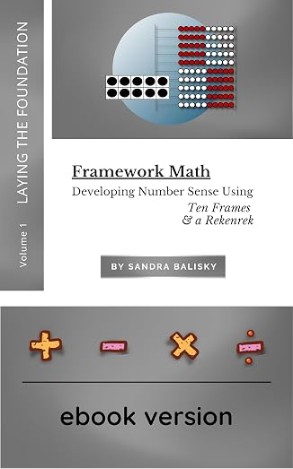
Framework Math Volume 1: Laying the Foundation: Developing Number Sense Using Ten Frames & a Rekenrek #1

Framework Math Volume 1: Laying the Foundation: Developing Number Sense Using Ten Frames & a Rekenrek

Parents and educators focusing on early number sense and foundational arithmetic.

£6.33

Math 2.0 finally kills the abstract. This book makes concepts stick. No more guessing. Just clear, tangible understanding.

Pros

  • Excellent structured guidance for number sense
  • Highly rated by educators for clarity
  • Perfect for foundational skills

Cons

  • Specific to early foundational skills
  • Requires buy-in from parents/teachers to be fully effective
View on Amazon
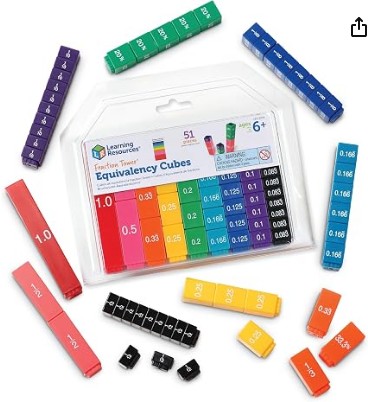
Learning Resources Fraction Tower Equivalency Cubes, Ages 6+, 51 Pieces #2

Learning Resources Fraction Tower Equivalency Cubes, Ages 6+, 51 Pieces

Hands-on learning of fractions, decimals, and percentages.

£14.99

Get kids these cubes. Seriously. For fractions, nothing beats holding a chunk of plastic in your hand. Screens just don't cut it for young minds.

Pros

  • Color-coded for easy visual comparison
  • Durable and safe for ages 6+
  • Excellent for hands-on equivalency learning

Cons

  • Can be expensive compared to paper resources
  • Small pieces require supervision for younger children
View on Amazon
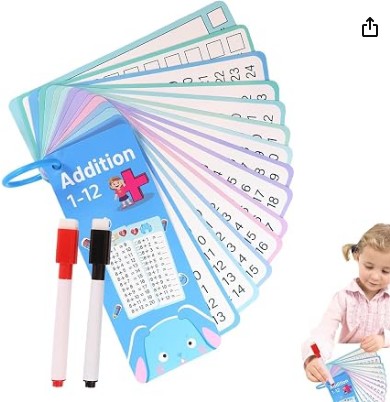
Addition Subtraction Flash Cards Dry Erase Double Sided Educational Hole #3

Addition Subtraction Flash Cards Dry Erase Double Sided Educational Hole

Daily drills and strategy observation for addition and subtraction.

£3.58

It’s a solid tool for low-stakes practice. The dry-erase board changes everything. Mistakes disappear instantly, so you actually learn.

Pros

  • Reusable and eco-friendly
  • Encourages repetition without paper waste
  • Hole-punched for easy organization

Cons

  • Unclear review count suggests limited feedback
  • Quality of markers not included
View on Amazon
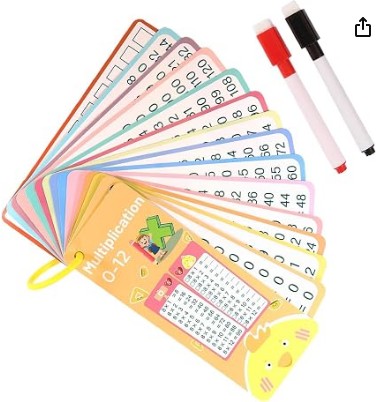
Math Learning Cards Dry Erase Double Sided Educational Hole Punched Flash #4

Math Learning Cards Dry Erase Double Sided Educational Hole Punched Flash

Mixed math practice including multiplication and division.

£4.82

Great for general math practice. They cover more ground than simple addition or subtraction drills. Honestly, they are worth keeping in your toolbox.

Pros

  • Double-sided for variety
  • Good for mixed practice
  • Affordable price point

Cons

  • No rating data available
  • May lack specific focus compared to specialized decks
View on Amazon
Addition Subtraction Flash Cards Dry Erase Double Sided Educational Hole #5

Addition Subtraction Flash Cards Dry Erase Double Sided Educational Hole

Targeted addition practice for early learners.

£3.59

It works just like the first set, though the content shifts a bit. Try it if you want to split addition and subtraction into separate practice sessions.

Pros

  • Focused content for targeted practice
  • Reusable dry-erase surface
  • Consistent with other flash card sets

Cons

  • Very similar to previous flash card product
  • Lacks verified review data
View on Amazon

What Is Math 2.0? Moving Beyond Test Scores

Standardized testing is a scam. It measures how fast you panic, not how well you think. We need to stop pretending speed equals intelligence.

Math 2.0 fixes this. It focuses on deep understanding instead of rote memorization. Struggling is part of the process, not a failure.

Tools like Framework Math Volume 1 show us the thinking behind the answers. They prove that logic matters more than quick recall.

Anxiety kills curiosity. When we value discovery, kids actually enjoy solving problems. Confidence comes from grasping concepts, not high test scores.

Real progress happens in daily habits.

Step-by-Step Framework: Assessing Progress Holistically

Watch how kids actually handle the blocks. Don’t just look at test scores. How they stack the Fraction Tower Equivalency Cubes tells you everything about their understanding of decimals and fractions. Written tests miss the messy, real-time thinking happening in their heads.

Then, let them play with dry erase cards. The Addition and Subtraction Flash Cards remove the fear of making a permanent mistake. They can try, fail, and erase without the anxiety of a graded page.

Strategy matters more than the right answer.

Did they count on their fingers or recall a known fact instantly? That choice reveals their actual comfort level. Use this to guide the next step, not just to assign a grade.

Stop looking for gaps. Start looking for growth. Adjust your lessons based on what you see, not what you expect.

Practical Rubrics, Portfolios and Milestone Trackers

Skip the high-stakes tests. Instead, build portfolios that actually show how a kid thinks. Snap photos of them using the Fraction Tower and record them explaining their logic out loud. That context beats a cold, isolated score every single time.

Tracking number sense needs solid tools, not vague guesses. Use the Framework Math Volume 1 for clear benchmarks on ten-frames and rekenrek usage. It gives you concrete data on foundational skills without the guesswork.

Stop grading for speed.

Rubrics should reward strategy and genuine effort. If a student tries a new approach and fails, that’s progress, not a mistake. Celebrate the pivot, not just the right answer.

Parents and teachers need to talk. Home discussions and classroom participation notes paint a full picture. This transparency stops progress from feeling abstract and hidden.

Students start caring about understanding when they can see their own journey. They stop chasing grades and start chasing clarity. That shift is everything.

Case Studies: Schools and Families Adopting Math 2.0

I saw a primary school ditch timed quizzes for dry erase flash cards. Teachers stopped grading and started guiding strategy sessions. Kids began openly explaining their mental math steps. The anxiety vanished.

It turned math from a chore into a puzzle. Engagement soared the moment the pressure lifted.

At home, one family used Framework Math Volume 1 to build number sense first. They held off on formal algorithms. The kid’s estimation skills improved fast. This proves that solid foundations handle later complexity better than rote memorization.

Immediate feedback lets you adjust on the fly. You stop teaching to a test and start teaching to the learner. Confidence grew in weeks, not months.

Short-term metrics don’t build real understanding. Math 2.0 works because it respects the human pace of learning.

Toolkit and Downloadable Resources for Implementation

You need physical stuff to make math real. Abstract ideas stick better when you can touch them.

Grab the Fraction Tower Equivalency Cubes. They give kids actual weight and feedback for fractions and decimals. Pair them with dry erase Addition Subtraction flash cards. Repetition is key, and being able to wipe the board clean removes the fear of making mistakes.

Structure matters too. Framework Math Volume 1 uses ten frames and rekenreks to build a solid foundation. Don't just buy random tools and hope for the best.

Keep your hole-punched cards organized. If you can't find them, you won't use them.

Print trackers for milestones, then share them with parents. This turns assessment into a team effort rather than a secret club. Meaningful growth happens when everyone understands the roadmap.

Frequently Asked Questions

What is the main benefit of Math 2.0?

It kills test anxiety. You learn concepts instead of just memorizing facts.

How do flash cards fit into holistic assessment?

Dry erase flashcards give you a safe space to practice. You get to see exactly how someone solves a problem.

Can parents implement this at home?

The Framework Math Volume 1 and fraction cubes work. They actually make math accessible for families.

Why use manipulatives like fraction cubes?

Visual and tactile feedback makes decimals click. You feel the math.

How often should I update progress trackers?

Weekly check-ins show real progress. Don't obsess over daily noise.

Is speed still important in Math 2.0?

Don't rush. Accuracy matters more. Fluency shows up on its own.